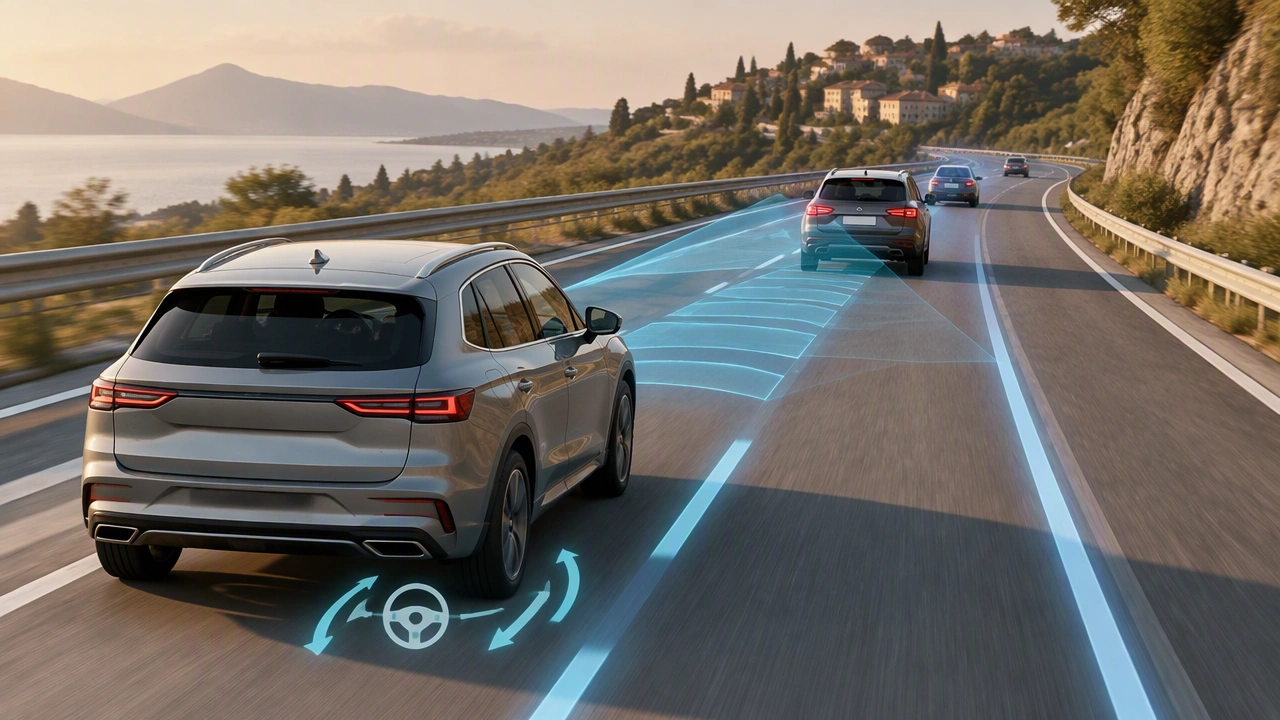
How ADAS Driver Assistance Works: Lane Keeping, Adaptive Cruise, and Real Limits
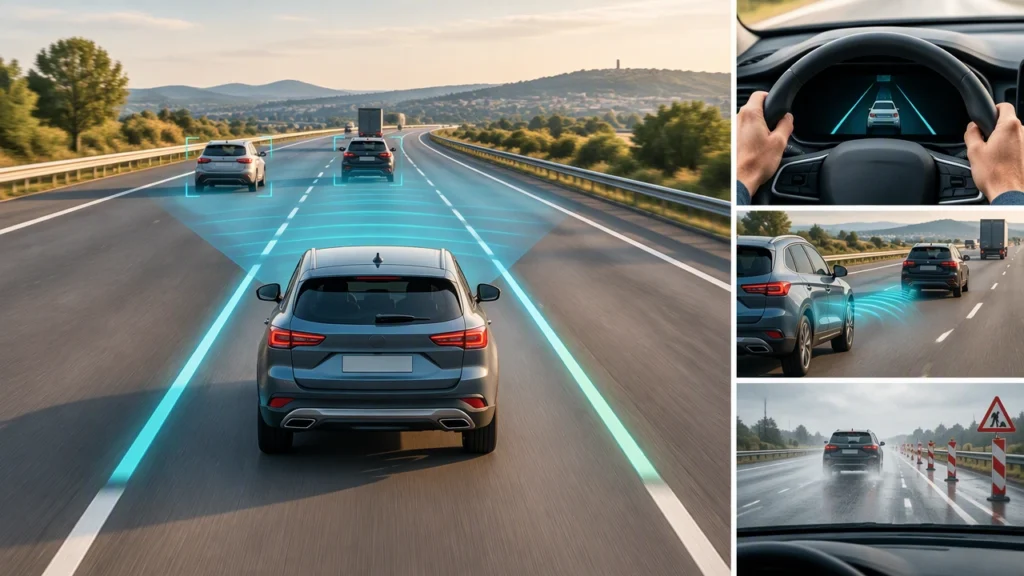
Modern cars can steer themselves into a lane, keep a set distance from traffic, and brake for hazards before a driver reacts. Those abilities come from advanced driver assistance systems, commonly called ADAS. Understanding how does ADAS driver assistance system work helps drivers use it confidently without expecting more than the technology can deliver.
The key idea is simple: ADAS watches the road and the car, interprets what it sees, and then either warns the driver or makes a limited adjustment to steering, throttle, or braking. It is designed to assist a person who remains responsible for the drive. It is not a self-driving system, and its performance changes with weather, road design, traffic, and vehicle settings.
The sensors that make assistance possible
Most ADAS-equipped vehicles combine several types of sensors. A forward-facing camera is usually mounted near the top of the windshield. It reads lane lines, road signs, vehicles, cyclists, and sometimes pedestrians. Radar sensors, often hidden behind the grille or bumper, measure the distance and relative speed of objects ahead. Some systems add ultrasonic sensors for close-range detection and cameras around the vehicle for a surround view.
The software fuses these inputs into a working model of the road. The car does not see the world the way a person does. It detects contrast, shapes, reflections, and radio echoes, then applies rules and probability. A faded lane line, heavy spray, or an unusual road layout can reduce confidence in that model. When confidence drops, a well-designed system should warn the driver or limit its own intervention.
What happens in a typical drive
When adaptive cruise control is active, the radar tracks the vehicle ahead and calculates a gap. The system adjusts speed to maintain that gap, slowing when traffic compresses and accelerating back toward the set speed when the road clears. Lane keeping uses the camera to measure the car’s position between markings and applies gentle steering input to reduce unintentional drift. Driver monitoring cameras or steering-wheel sensing may check whether the driver remains attentive.
Lane keeping: helpful guide, not a lane lock
Lane keeping features come under several names: lane keeping assist, lane centering, lane departure warning, and lane tracing assist. They do not all work the same way. Lane departure warning simply alerts you when the car crosses or approaches a marking without an obvious turn signal. Lane keeping assist applies corrective steering to help bring the car back. Lane centering is more active, making continuous small adjustments to keep the vehicle near the middle of the lane.
The limits are practical. Camera-based systems depend on visible lane markings. Temporary construction lines, patches of new asphalt, snow, rain, glare, and sharp curves can confuse them. Some roads have no markings at all. A system may also interpret a wide shoulder or an offset merge as a lane edge. Drivers should expect smooth assistance on well-marked highways and more frequent warnings or disengagements on secondary roads.
Where drivers get overconfident
A common mistake is treating lane centering as a substitute for steering. Hands-on requirements exist because the system can misread the road, and because the driver must be ready to take over immediately. Another mistake is assuming the car will always recognize a stopped vehicle ahead. Some systems handle stationary objects poorly at higher speeds, especially when a moving vehicle was previously tracked. Always keep your eyes forward and be prepared to brake.
Adaptive cruise control: gap management with boundaries
Adaptive cruise control (ACC) is designed for steady traffic flow. You choose a following gap or time setting, and the system manages throttle and braking within its operating range. Many versions can bring the car to a stop in traffic and then resume when the vehicle ahead moves. Others may warn you to take over if the stop lasts too long.
ACC works best when it can clearly identify a lead vehicle. Intersections, sharp curves, entering traffic, and objects that suddenly cross the path can challenge it. The system may react late to a cutting-in car, or it may slow more aggressively than you would prefer. It also may not understand why the driver ahead is braking, so it responds to distance and speed rather than intent.
Using ACC in real conditions
Set a larger gap in rain, fog, or heavy traffic. Use the brake pedal when you need a faster response, and cancel the system before making a turn that it cannot follow. Remember that ACC is not collision avoidance by itself. Many vehicles pair it with automatic emergency braking, but that feature has its own speed limits, detection thresholds, and environmental constraints.
Other common ADAS features and their roles
- Automatic emergency braking: warns about a possible impact and may apply the brakes if the driver does not respond in time.
- Blind-spot monitoring: alerts you to vehicles alongside the car, usually with a light in the mirror.
- Rear cross-traffic alert: detects approaching traffic when reversing from a parking space.
- Traffic sign recognition: reads signs and displays a speed limit or other information, sometimes using map data as a backup.
- Driver monitoring: watches eye gaze or steering behavior to identify distraction or drowsiness.
These features overlap, and their names vary by manufacturer. Read the owner’s manual for the exact behavior of your vehicle, including warning sounds, steering feel, and conditions that cause the system to disengage.
The real limits drivers should remember
ADAS is most reliable on clear roads with good markings, steady traffic, and predictable geometry. It is least reliable in poor visibility, complex work zones, unmarked lanes, and situations where objects appear suddenly. Sensors can be blocked by dirt, ice, or heavy rain. Sun glare can blind a camera, while radar may be affected by unusual object shapes or reflective surfaces.
There are also human factors. Drivers may become complacent when a system performs well for long stretches, then react too slowly when it asks for help. Others may fight the steering wheel or override a warning without understanding why it appeared. The safest approach is to treat ADAS as a co-pilot: use its strengths, know its blind spots, and keep your attention on the road.
A practical checklist for every trip
- Confirm that the windshield and sensors are clean and unobstructed.
- Set ACC gap for conditions, not for convenience alone.
- Keep hands on the wheel and eyes on the road when lane centering is active.
- Be ready to brake, steer, or cancel assistance at any moment.
- Learn which features your car has and how each one warns you.
ADAS can reduce fatigue and help prevent common mistakes, but it works within defined boundaries. Understanding those boundaries turns a collection of alerts and interventions into a tool you can use with judgment, rather than a promise the road cannot keep.