
Home / Ownership and Community
What Is a Car Forum and How to Use It: A Beginner’s Guide
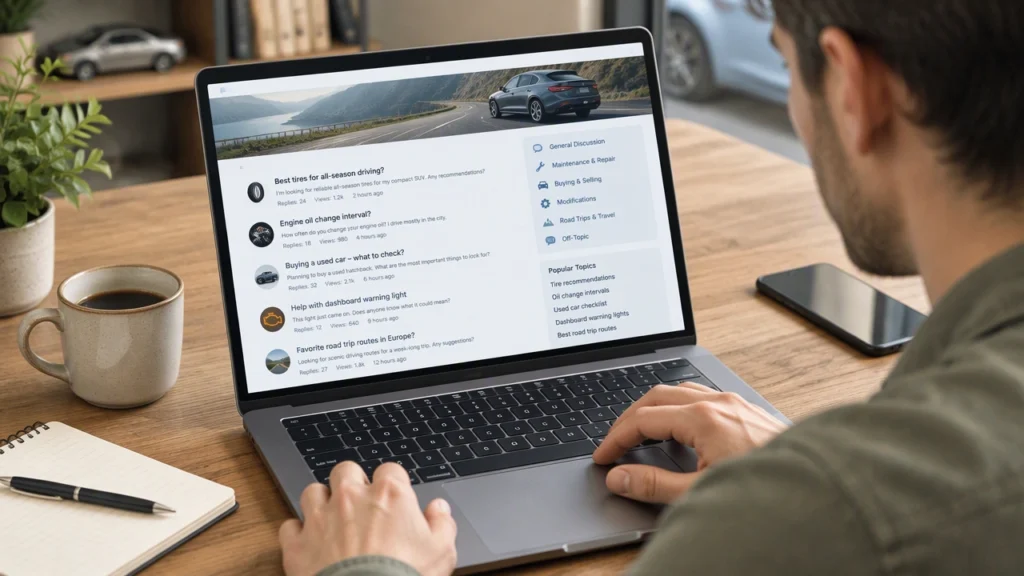
A car forum is an online community where drivers, owners, mechanics, and enthusiasts discuss vehicles through organized message threads. Unlike social media posts that quickly disappear, forum discussions are grouped by topic and remain searchable for years. This guide explains what is a car forum and how to use it to get dependable advice without feeling overwhelmed.
What a car forum actually is
At its simplest, a car forum is a website built around conversations. Each discussion begins with an original post, followed by replies from other members. Conversations are arranged into categories such as engine problems, maintenance, electronics, buying advice, or model-specific sections. Many forums also allow members to create profiles, save favorite threads, and subscribe to updates.
What makes a forum different from a general social network is structure. A question about a warning light can live in one thread, accumulate detailed answers, and be found later by another owner with the same problem. That archive is often the most valuable part of the community.
Why drivers use forums
Drivers turn to forums for several practical reasons:
- Experience from many owners. People describe what happened to their own cars, what repairs cost, and which fixes worked.
- Model-specific knowledge. Forums often contain detailed information about particular engines, transmissions, trim levels, and common faults.
- Troubleshooting help. Members can help narrow down a problem before a driver spends money on parts or labor.
- Buying and ownership advice. Owners discuss reliability, maintenance schedules, options, and long-term costs.
- Community support. Repair work can feel stressful, and thoughtful advice from experienced owners can make the process clearer.
A forum does not replace a qualified mechanic. It is a place to gather information, ask questions, and prepare for a more productive conversation with a professional.
How to find a good forum
Search for forums dedicated to your car’s make, model, and generation. A model-specific community will usually understand your exact parts, error codes, and known issues better than a general automotive board. Look for signs of activity: recent posts, thoughtful replies, and moderators who keep discussions useful.
Before posting, spend time reading. Use the search function with your vehicle year, engine size, and a short description of the problem. Search results can reveal whether a question has already been answered in detail. If you find an old thread, read the entire discussion rather than relying on the first reply.
How to ask a question that gets reliable answers
Good questions attract better answers. Include the information another owner needs to understand your situation:
- Vehicle details: year, make, model, trim, engine, and transmission.
- Exact symptom: what you see, hear, smell, or feel.
- When it happens: cold starts, braking, turning, acceleration, or highway speeds.
- Recent work: repairs, parts replaced, fluid changes, or modifications.
- Tests already completed: codes read, visual checks, or measurements taken.
Write a clear title such as 2018 sedan shakes at 60 mph after tire rotation. Avoid titles like car problem, which do not help other members decide whether they can assist. Be honest about what you know and what you are guessing.
How to judge whether advice is trustworthy
Not every reply will be equally reliable. Treat forum answers as reports from experience, then compare patterns across several posts. Advice supported by consistent owner reports, clear reasoning, and specific testing is more useful than a confident one-line answer.
Pay attention to details that affect safety. Brake, steering, suspension, tire, fuel, and electrical systems require extra caution. If a suggestion could endanger you or others, ask a trusted mechanic to inspect the vehicle before proceeding. When a reply recommends an expensive repair, ask what evidence supports it and whether a simpler check should come first.
How to participate without breaking forum etiquette
Most communities value patience and respect. Read the rules before posting, use the correct category, and keep the discussion focused on the vehicle rather than attacking people. If a member helps you, report the outcome. A follow-up post explaining what fixed the problem turns your question into a resource for the next driver.
Do not post personal information, payment details, or private messages. If you share photos, remove sensitive data from the image. Use the report function for spam or unsafe advice instead of arguing publicly.
Common mistakes beginners make
New members sometimes post the same question in several categories, which splits the discussion and makes answers harder to find. Others paste a long diagnostic report without explaining what they have already tried. Some accept the first answer without checking whether it matches their exact model year.
Another mistake is treating a forum like a replacement for professional diagnosis. You can learn a great deal from owners, but a forum cannot inspect a worn part, road-test your car, or guarantee a repair. Use the information to make better decisions, not to skip necessary safety checks.
A simple workflow for getting help
Start by searching the forum with specific terms. Read related threads and note recurring suggestions. Prepare a concise post with your vehicle details, symptom, timing, and prior work. Ask one focused question at a time so members can respond clearly. After receiving suggestions, test them in a safe order and document the results.
When the problem is solved, reply with the final diagnosis and repair. If the issue remains unresolved, explain what you tested and what changed. This steady approach makes it easier for experienced members to see where the investigation should go next.
Final thought
A car forum is most useful when you approach it as a shared notebook of owner experience. Search before asking, provide complete details, compare multiple replies, and keep safety-critical work with qualified professionals. Used this way, a forum becomes a calm, practical place to learn about your car and make better ownership decisions.