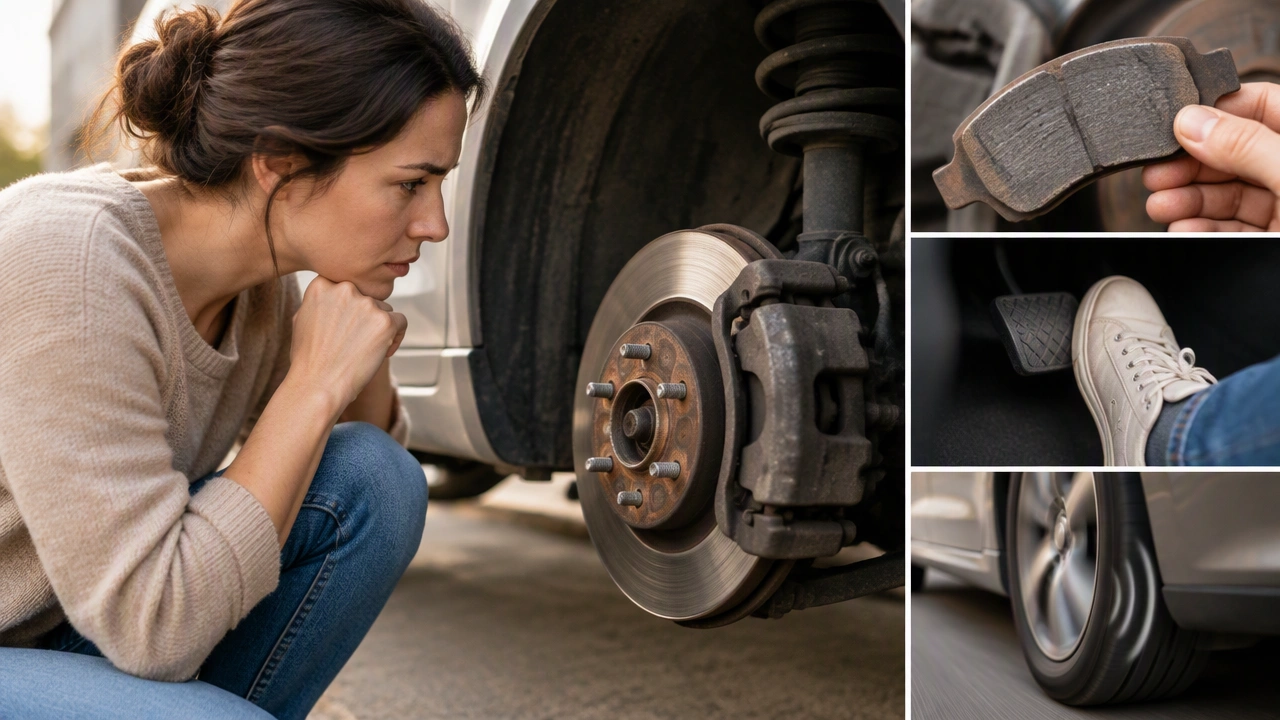
When to Replace Brake Pads: Sounds, Feelings, and Warning Signs
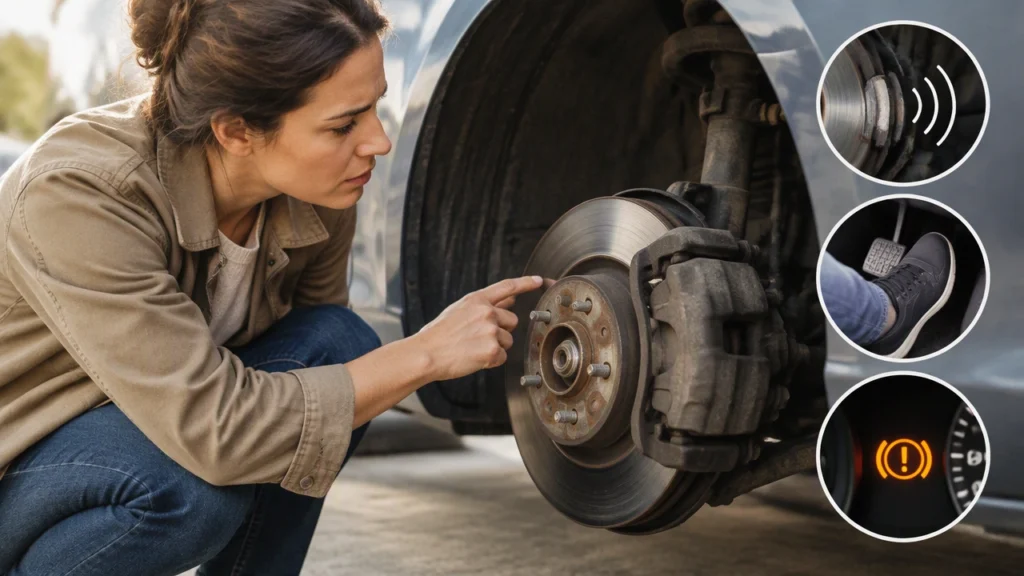
Brakes rarely fail without warning. Long before a pedal goes soft or a rotor is damaged, the car usually gives you clues through sounds, vibrations, and changes in stopping behavior. Knowing when to replace brake pads helps you plan repairs, avoid expensive damage, and drive with confidence. This guide gathers the most common signs into one practical checklist for everyday drivers.
Brake pads are wear items. Their friction material presses against the rotor to slow the wheel, and that material becomes thinner with every stop. Most pads include a small metal wear indicator designed to touch the rotor when the friction material is nearly gone. The result is a clear warning sound that becomes louder over time.
Sounds That Suggest Worn Brake Pads
A high-pitched squeal or chirp during light braking is one of the earliest and most recognizable warnings. It often appears only at low speeds or when the brakes are cold. The sound may come and go at first, then become more consistent. Think of it as a built-in reminder to inspect the pads rather than a reason to panic.
A grinding or scraping noise is more urgent. It can mean the wear indicator has been touching the rotor for a while, or that the friction material has worn down to the backing plate. At that point, the metal backing can score the rotor surface. Grinding can also come from a stone caught between the pad and rotor, a corroded rotor edge, or a stuck caliper slide, so the brakes should be checked promptly rather than assumed to be fine.
Listen for changes after washing the car or driving through wet weather. A brief squeak when the brakes are damp is usually caused by light surface rust on the rotors and often disappears after a few gentle stops. A sound that persists for days, grows louder, or appears only when braking is more likely to be a pad warning.
Feelings and Pedal Changes Worth Noting
Vibration through the brake pedal or steering wheel during braking often points to uneven pad or rotor wear. You may feel a steady pulse at moderate speeds, or a shudder when stopping from highway speed. Thin pads can overheat more easily, and a rotor with thickness variation or heat spots can amplify the sensation. Have the braking system measured so a technician can determine whether the pads, rotors, or both need attention.
A pedal that travels farther before the car slows can have several causes. Worn pads are one possibility because the caliper piston must move farther as the material thins. Air in the hydraulic system, a leaking line, failing brake fluid, or a weak master cylinder can also change pedal feel. Any sudden increase in pedal travel deserves prompt inspection, especially if the pedal feels spongy or sinks toward the floor.
If the pedal feels unusually hard and the car does not slow normally, do not keep driving to test it. That symptom can indicate a hydraulic problem or a seized component. Pull over safely and seek help.
Warning Signs You Can See and Feel
- Squealing or squeaking that returns with each stop: The wear indicator may be contacting the rotor.
- Grinding or metal-to-metal contact: The pad material may be gone, and rotor damage may be developing.
- Longer stopping distances: The car needs more pedal pressure or more road space to reach the same speed.
- Pulling to one side under braking: A caliper, guide pin, hose, or pad set may be sticking on one side.
- Dashboard brake warning light: Some vehicles alert you to low pad thickness or a fluid-level problem.
- Burning smell after braking: A hot-rotor smell can follow hard use, but a persistent odor may mean a dragging caliper or severely worn pads.
Pay attention to the shape of the pedal as well. A pedal that vibrates rhythmically while you brake often reflects rotor runout. A pedal that is firm at first and then fades during repeated stops may be overheating. These symptoms do not always mean the pads alone are at fault, but they are reasons to inspect the whole braking system.
How Often Should Brake Pads Be Replaced?
There is no single mileage that fits every driver. City traffic, mountain roads, towing, aggressive stopping, pad material, rotor condition, and vehicle weight all affect pad life. Some drivers replace pads every 20,000 to 30,000 miles, while others get more from a gentle driving style and highway use. The best approach is to measure the remaining friction material during routine service and replace the pads before they reach the minimum thickness.
Most manufacturers specify a minimum pad thickness, often around 2 to 3 millimeters, but the exact figure depends on the vehicle. A visual inspection can also reveal uneven wear, cracked friction material, loose hardware, or a caliper that is not releasing fully. If one pad is much thinner than its neighbor, the problem may be mechanical rather than simply age.
What to Do When You Notice a Sign
Start with a careful test drive in a safe area. Note whether the sound or vibration happens at all speeds, only when braking, or only after the brakes warm up. Avoid hard stops while you evaluate the car, and leave extra distance in traffic. If the noise is loud, the pedal feel has changed, or the warning light is on, have the vehicle inspected before continuing a long trip.
A brake inspection should include pad thickness, rotor condition, caliper operation, brake fluid condition, and the hardware that lets the pads move freely. Replacing pads without addressing a seized slide or a badly scored rotor can lead to rapid wear and a repeat complaint. Ask for measurements and photos if you are unsure what was found.
Simple Habits That Help Pads Last
Leave more space ahead of the car and brake earlier for stops. Smooth, progressive pressure generates less heat than a late stomp. Avoid resting your foot on the pedal, and have the brakes checked after towing, long descents, or any episode of overheating. Keep up with scheduled inspections, especially if you drive mostly in stop-and-go traffic.
The practical takeaway is simple: listen for a persistent squeal, treat grinding as urgent, feel for vibration or a changing pedal, and watch for longer stopping distances. Recognizing when to replace brake pads early keeps the repair straightforward and helps the rest of the braking system stay healthy.