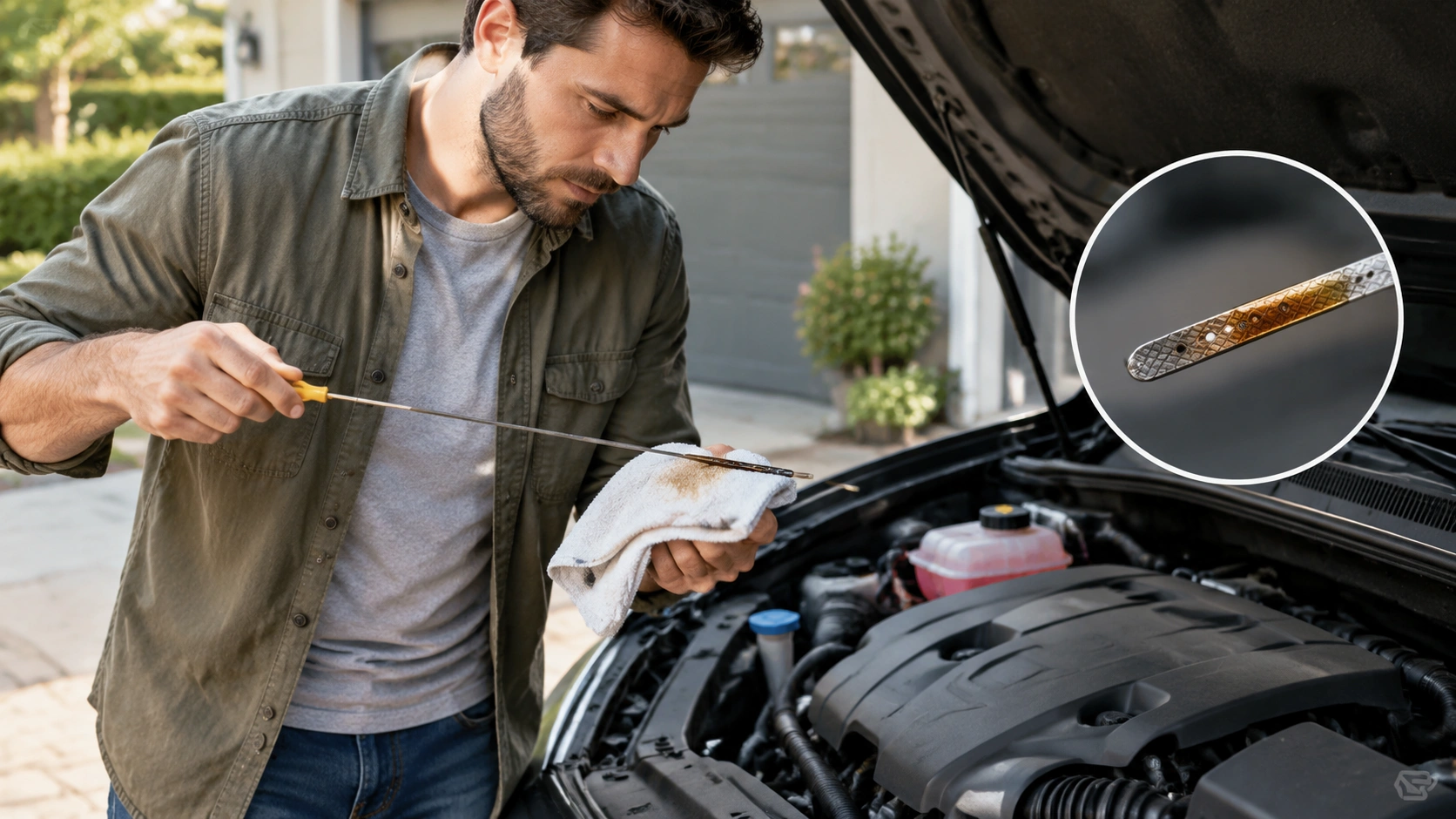
Learn how to check your engine oil level and condition correctly in your driveway in under five minutes
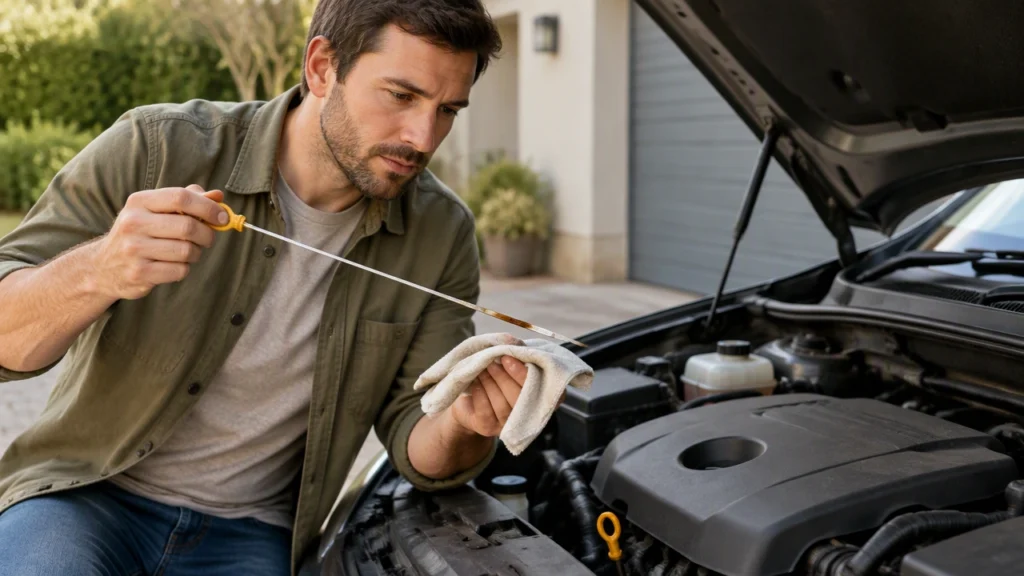
Checking your own engine oil is one of the easiest car care habits you can build. If you have ever wondered how to check engine oil level at home, this short guide walks you through the process in your driveway in under five minutes. No special tools, no messy surprises, and no prior experience required.
Engine oil lubricates moving parts, helps remove heat, and carries away tiny bits of wear. When the level drops or the oil becomes degraded, your engine works harder and may wear out sooner. A quick, regular check gives you early warning of leaks, burning oil, or overdue service, and it helps you avoid roadside trouble.
What you need before you start
- Clean paper towels or a lint-free rag for wiping the dipstick and reading the oil.
- A small flashlight or phone light to see the dipstick markings clearly.
- The correct oil for your engine, in case a small top-up is needed. Check your owner’s manual or the oil filler cap for the grade.
- A funnel (optional but helpful) to avoid spills when adding oil.
Wear gloves if you prefer to keep your hands clean. If you are wearing loose sleeves, roll them up so they do not touch hot or moving parts.
Prepare the car safely
Park on level ground. A flat driveway or garage floor ensures the dipstick reading is accurate. Set the parking brake and turn the engine off.
If the engine has been running, wait 5 to 10 minutes so the oil can drain back into the sump. If the engine is cold, you can still check, but a brief warm-up of two to three minutes helps the oil flow and gives a more representative reading. Avoid checking immediately after hard driving or at full operating temperature, because hot oil can cause burns and the reading may be less stable.
Open the hood and find the dipstick
Release the hood from inside the car, then lift it and secure it with the prop rod or gas struts. Look for a brightly colored handle, often yellow or orange, near the front or side of the engine. That is the engine oil dipstick.
If you are unsure, consult your owner’s manual. Some vehicles have separate dipsticks for transmission fluid; the engine oil dipstick is usually closer to the center or front of the engine and is clearly labeled.
Step-by-step: how to check engine oil level at home
- Pull the dipstick out slowly and wipe it clean from the handle down to the tip. This removes oil splashed during driving and gives a fresh, readable mark.
- Reinsert the dipstick fully until it seats. Make sure it goes in all the way; a partially inserted dipstick can give a false low reading.
- Pull it out again and read the level. Look for the two marks or crosshatched area labeled “MIN” and “MAX.” The oil film should sit between those marks, ideally closer to the MAX line.
- Check the condition of the oil while the dipstick is out. Fresh oil is amber and translucent. As it ages, it darkens to brown or black. That alone is not always a problem, but if it looks very dark, gritty, or has a burnt smell, it may be time for an oil change.
- Reinsert the dipstick securely when you are done.
That is the basic check. It should take about one to two minutes once you are familiar with the steps.
How to read the level correctly
Always read the oil on a level surface. If the reading is just below the MAX line, that is normal. If it sits at or below the MIN line, you should add a small amount of oil and recheck.
Use the dipstick to estimate how much to add. On many cars, the distance between MIN and MAX represents roughly one quart (about one liter). Add oil in small increments, wait a minute, then recheck. Avoid overfilling, because excess oil can foam and cause issues.
What the oil condition tells you
- Light brown to dark brown: Normal for oil that has been in service. If you are within your change interval, this is expected.
- Very black and gritty: May indicate extended service or contamination. Consider an oil change and check your maintenance schedule.
- Milky or frothy appearance: Could indicate coolant mixing with oil. Stop driving and seek professional inspection.
- Metal flakes or particles: Unusual and potentially serious. Have a mechanic inspect the engine.
- Strong burnt smell: Suggests oil is overheating or the engine is running hot. Check oil level, cooling system, and consult a professional if the smell persists.
If the oil level is low
Top up with the grade recommended by your vehicle manufacturer. Remove the oil filler cap, add a small amount of oil, wait a minute for it to settle, then recheck with the dipstick. Clean any spills, and tighten the filler cap firmly.
If you find yourself adding oil frequently, look for signs of leaks under the car (spots on the driveway, oil residue around gaskets) or blueish exhaust smoke. Even if the car seems to run fine, frequent oil loss deserves attention.
Common mistakes to avoid
- Checking right after shutoff: Oil clings to upper engine parts. A short wait lets it drain back for a more accurate reading.
- Not wiping the dipstick: Splash marks can make the level look higher than it is.
- Reading on a slope: Even a slight incline can shift the level in the pan.
- Overfilling: More oil is not better. Too much can cause foaming, increased pressure, and potential seal leaks.
- Ignoring the condition: Level is only half the story. Color, smell, and texture also matter.
Building a simple routine
Make it a habit to check your oil once a month, before a long trip, or whenever you notice the oil pressure or low-oil warning. Keep a small towel and a flashlight in the garage so the process is quick and painless. If your car uses oil faster than expected, write down the date and mileage each time you top up. That record helps you and your mechanic spot trends early.
Final thoughts
Knowing how to check engine oil level at home gives you confidence, saves time, and helps you catch small issues before they become big repairs. With level ground, a clean dipstick, and a few minutes, you can verify your oil level and condition in your driveway. If anything looks unusual, a quick call to a trusted shop can guide your next step. This simple habit keeps your engine protected and your driving stress-free.